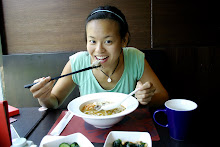
View last days pictures here: http://picasaweb.google.com/
Tuesday, December 30, 2008
Final Days
I can't believe how quickly the last few weeks in China have just flown by. Matt completed his last day of internship about the middle of December which also coinciding with Justus's visit to Shanghai and then Hong Kong. With only a few whole days in Shanghai and lots of clothes tailoring and food eating to be done, Justus and I wasted little time zooming around on the buses, subways and taxis to many of the well known places in Shanghai. To get a real taste of China, we boarded a train from Shanghai's south railway station for a 20 hour journey to Shenzhen, the special economic zone on the border of Hong Kong. Arriving by 6 am the next morning, we passed through customs and immigration and jumped the HK railray to Tai Wo, in Tai Po where my mom's family live. By mid week, we went into the HK island and visited the HK art gallery, toured Lantau island and the big sitting buddha, Stanley beach, Cheng Chao island, and had many excellent meals with family. We returned to Shanghai on Christmas day and with only three days left, Matt and I filled our time packing, visiting the aquarium, last minute shopping, and having an amazing Sichuan dinner that included Bian lian, the face changing opera. The morning of our departure was cold, overcast, and rainy. And although it hasn't rained for at least a couple months, I was sad to leave on such a dreary looking day. We enjoyed our time in Shanghai and learned so many things about the people and culture of the city. While I'm not so keen on jumping right back into school, I am so happy to be back in Austin. I've really learned to appreciate the little things that I didn't realize I took for granted like cleaner air, clean water, and less noise. I will miss the cheap produce, fresh noodles and dumplings, and the easy to use public transportation. I definitely would like to return to China and Shanghai one day. I'm sure with all the new construction, it will be a different city every time we visit.
View last days pictures here: http://picasaweb.google.com/lh/sredir?uname=adrienne.kam&target=ALBUM&id=5285526469958920321&authkey=ZJx83FlcX0M&feat=email
View last days pictures here: http://picasaweb.google.com/

Thursday, November 27, 2008
Beijing
We just took a quick trip to Beijing this weekend since Matt had a couple days off from work.
See photos here:
http://picasaweb.google.com/adrienne.kam/Beijing?authkey=BQ4wIoS9EhQ
See photos here:
http://picasaweb.google.com/
K-town comes to Shangers
I had a great birthday this year and celebrated all the things that are notable in Shanghai in the autumn season. My dad and Di arrived on the afternoon of my birthday and we went to a famous Shanghai restaurant for Hairy crabs. They are a type of freshwater crab that grows a furry mat on their claws. They are favored for their rich yellow gonads, but I found them to be stickier than super glue in the mouth. The crab meat had a nice flavor and found their way into many of the other dishes. Although I have never really had an allergic reaction to crab before, I did wake the next morning with one eyelid a bit puffier than the other. Fortunately it went away after a couple of hours.
The next day, we took a bus to Zhou Zhuang, one of the well known water towns that surround Shanghai. Another common sight in the fall are all the beautiful chrysanthemums that are in bloom. I've never seen so much variety in color and form. Many old Chinese poems are inspired by the chrysanthemum blossoms and the return of the crabs to the river to mate in the fall.
See here for pictures:
http://picasaweb.google.com/adrienne.kam/DadAndDiSVisit?authkey=V_R0CLOXic0
The next day, we took a bus to Zhou Zhuang, one of the well known water towns that surround Shanghai. Another common sight in the fall are all the beautiful chrysanthemums that are in bloom. I've never seen so much variety in color and form. Many old Chinese poems are inspired by the chrysanthemum blossoms and the return of the crabs to the river to mate in the fall.
See here for pictures:
http://picasaweb.google.com/
Sunday, October 19, 2008
Wudang Mountain Trip
 click below for more photos
http://picasaweb.google.com/
Last Thursday, we had a day off of training so a group of us decided to take a trip up the mountain for the day. After a hearty breakfast at the local hotel which has extremely cheap local eats (ie rugan mian, xiaolongbao, baozi etc), we hopped into one of the many mini taxis here in Wudang to get to the park entrance. They don’t look particularly sturdy, but they still manage to get passengers from point A to point B. We fit 3 small people into ours which is like 1-1.5 standard Americans. Upon closer inspection, I realized that it was basically a motorcycle with a shell and two back wheels. I have even seen large three wheeled construction vehicles with the same configuration. Once inside with our ticket, we hopped a bus to each of the destination locations: Princess Slope, Monkey Valley, Purple Cloud Temple, and Nanyan Temple. It was a bright and clear day so we had great views of the valleys and of Wudang city from above.
Wudangshan is the Daoist holy land. Pilgrams and tourists alike are drawn to its Daoist monasteries, palaces and temples which were built as an organized complex during the Ming Dynasty, and contain Taoist buildings from as early as the 7th century. They represent the highest standards of Chinese art and architecture over a period of nearly 1,000 years and were designated an UNESCO World Heritage site in 1994. An important figure here in Wudang is Zhang San Feng, the legendary Daoist priest from the 14th century who became enlightened by the Dao and created taijiquan after observing a fight between a snake and a bird. It is here in the Wudang mountains that Master Yuan came to study Wudang wushu in 1991 and was accepted as the 15th generation disciple by Master Zhong Yun Long of the Wudang SanFeng Sect.
Another central figure of Daosim is Lao Zu incarnate, Emperor Zhen Wu. According to Daoist Canon, he was a prince who, at the age of 14, refused his position as King and went to Wudang to cultivate himself. He attained enlightenment after 42 years and was named the God of the North over the God of Thunder, wiping out the devils and helping sufferers. For his achievements, he was named Xuantian Emperor and his statue is now seen and honored in the Purple Cloud Temple. This temple is the quintessential image seen in any movie representing Wudang including, Ang Lee’s Crouching Tiger, Hidden Dragon, though it was not filmed on location. Perching on the South Cliff, Nanyan Temple is known as the place where Emperor Zhen Wu found Daoism and flew to heaven. The whole structure - hall-pillars, beams, arches, gates and windows - is created out of rock. We arrived there in there in the afternoon after a late lunch and it was wonderful to just look out over the valley towards the setting sun. Before returning to town, we stopped in a shop selling scrolls, teapots, and Daoist tea and enjoyed several cups of green tea rolled in ginseng.
The "nature" stop on our tour was Monkey Valley which as the name implies, was a valley full of monkeys. I always come to places where wild animals and people routinely intersect with a little apprehension. Particularly with very smart mammals. Of course, these animals are used to people visiting and you can buy peanuts or bring oranges for them to eat. In the main visiting area, some monkeys are even tied by some rope so that they remain in view even if the others are off in the trees somewhere. The babies, of course, are adorable especially when they climb trees, jump into the nearby streams and dog paddle around. The adolescents are still sweet as they come up to you for more peanuts or try to steal them from your bag, but are are still fearful enough to run away. The adult males are another story. Basically it is just smarter to avoid going near them if possible. We had an encounter with one where he would not let us return on a bridge over the stream. From his leaps, lunges, and body posturing, we knew we were in his territory so we backed out and found another route across the water.
It was a lovely outing, though we did not make it to the tippy top to see the Golden Temple. I'll try to make it up there on the next break. Or I might just rest up for another week of kicking and punching.
Dao ke Dao, feichang Dao
The Wudang Taoist Traditional Kungfu Academy has been my home away from home away from home for little over two weeks. Set in the base of the Wudang mountains, it is a very interesting slice of Chinese life that is very different from Shanghai. Because Wudangshan is on a frequently used rail line running between Wuhan and Chongqing, the ubiquitous sounds of train horns, heard all day and all night, remind us big busy places far away. Some mornings, before my 5:45 am alarm even goes off and while it is still pitch black outside, I wake to the sound of fireworks and to the bright light it flashes on my walls. During morning qigong practice, we may hear traditional Daoist music and more fireworks from the nearby Daoist temple signifying either a wedding, a funeral, or a new birth. As the dawn light brightens the basketball court where we practice qigong, many birds, that I am eager to identify, clear the muzziness in my head with their sweet song.
On our daily walks to the Yuxu palace grounds for practice, I can really see what small town life in China is like. There are rows and rows of vegetables grown not only in the large fields adjacent to the school, but also in smaller plots right next to the road. Next to the fields is a concrete structure serving as a public toilet that I can only guess eventually acts as compost for the gardens. According to modern public health policies, “nightsoil” is no longer permitted to be used in food production, but I’ve heard it is still practiced here. Wafts of air coming down the mountain also carry the scent of human waste from the toilets to the basketball court making me wonder some mornings, how beneficial qigong can be under these circumstances. Up the hill, orange trees are ready for harvest and their fruits can be found on every corner in Wudang. In fact, these sweet and sour oranges are so plentiful that some locals will just peel the oranges, toss the fruit, and dry the peels in the sun to use or sell as herbal medicine. Another common sight as I walk to class, are of babies and young children all of whom have an opening in the seat of their pants. Even on cold days when the babies are wearing so many layers that they look like Michelin man, their poor little bums are exposed to the air. Diapers are rarely used here, perhaps because they are too expensive or inconvenient. What could be more convenient than a vent in the pants that allows your child to squat, wherever they are, do their business and walk away. Strolling down the main pedestrian walkway from the school, I passed two mothers that were holding their babies of maybe 3-4 months close to the ground and making “shhhhhhhhhhh” noises to train their baby to urinate or defecate on command. I have heard of this method of potty training in the US but was not sure of how it could actually be put into practice. In the US, you still have to find a toilet or a sink, whereas in China, the street will do just fine. I now have even more sympathy for the under appreciated street cleaners..
Wudang Taoist kungfu, though not as well known as Shaolin, is beginning to pull more and more visitors to Wudangshan each year. I’ve been told that Shaolin has already lost it’s original charm and has now turned into something like Disneyland with hotels, performance halls, and tours full of picture snapping vacationers. Unfortunately, it appears that Wudang may suffer a similar fate. In the time I’ve been here, I’ve seen new renovations begun on Yuxu palace where we practice, new roads are being laid, walls built up around the train tracks, sidewalks paved, etc. Soon enough, the school itself will be moved to another location to accommodate more tourist related services.
There seems to be an even stronger push more recently to upgrade the road conditions because of the upcoming 3rd World Traditional Wushu Championship that is being held at the end of this month in Shiyan, a city about 45 minutes from Wudang. This competition will certainly bring more visitors to the area around the Yuxu palace and to the Wudang mountain temples. It is an international event and several of the foreign students from our school will perform in the opening ceremonies. Each country is only allowed a certain number of participants so countries with lots of support for wushu, like the US and China, have already met their quota, whereas places like Holland and Scotland still need representatives. I am excited that I will still be in town for this event and to avoid the exhorbitant ticket cost, I’ve been designated the “doctor” for the US wushu team. Jian, the school administrator found a loophole to bring students to the competition as spectators since each country can bring one doctor, one teacher, and one coach. Our Sifu, Yuan Xiu Gang will participate in the championship and will train for it up until it begins on Oct 28th. Unfortunately for me, I will not get much training time with him since I leave in the beginning of November.
On our daily walks to the Yuxu palace grounds for practice, I can really see what small town life in China is like. There are rows and rows of vegetables grown not only in the large fields adjacent to the school, but also in smaller plots right next to the road. Next to the fields is a concrete structure serving as a public toilet that I can only guess eventually acts as compost for the gardens. According to modern public health policies, “nightsoil” is no longer permitted to be used in food production, but I’ve heard it is still practiced here. Wafts of air coming down the mountain also carry the scent of human waste from the toilets to the basketball court making me wonder some mornings, how beneficial qigong can be under these circumstances. Up the hill, orange trees are ready for harvest and their fruits can be found on every corner in Wudang. In fact, these sweet and sour oranges are so plentiful that some locals will just peel the oranges, toss the fruit, and dry the peels in the sun to use or sell as herbal medicine. Another common sight as I walk to class, are of babies and young children all of whom have an opening in the seat of their pants. Even on cold days when the babies are wearing so many layers that they look like Michelin man, their poor little bums are exposed to the air. Diapers are rarely used here, perhaps because they are too expensive or inconvenient. What could be more convenient than a vent in the pants that allows your child to squat, wherever they are, do their business and walk away. Strolling down the main pedestrian walkway from the school, I passed two mothers that were holding their babies of maybe 3-4 months close to the ground and making “shhhhhhhhhhh” noises to train their baby to urinate or defecate on command. I have heard of this method of potty training in the US but was not sure of how it could actually be put into practice. In the US, you still have to find a toilet or a sink, whereas in China, the street will do just fine. I now have even more sympathy for the under appreciated street cleaners..
Wudang Taoist kungfu, though not as well known as Shaolin, is beginning to pull more and more visitors to Wudangshan each year. I’ve been told that Shaolin has already lost it’s original charm and has now turned into something like Disneyland with hotels, performance halls, and tours full of picture snapping vacationers. Unfortunately, it appears that Wudang may suffer a similar fate. In the time I’ve been here, I’ve seen new renovations begun on Yuxu palace where we practice, new roads are being laid, walls built up around the train tracks, sidewalks paved, etc. Soon enough, the school itself will be moved to another location to accommodate more tourist related services.
There seems to be an even stronger push more recently to upgrade the road conditions because of the upcoming 3rd World Traditional Wushu Championship that is being held at the end of this month in Shiyan, a city about 45 minutes from Wudang. This competition will certainly bring more visitors to the area around the Yuxu palace and to the Wudang mountain temples. It is an international event and several of the foreign students from our school will perform in the opening ceremonies. Each country is only allowed a certain number of participants so countries with lots of support for wushu, like the US and China, have already met their quota, whereas places like Holland and Scotland still need representatives. I am excited that I will still be in town for this event and to avoid the exhorbitant ticket cost, I’ve been designated the “doctor” for the US wushu team. Jian, the school administrator found a loophole to bring students to the competition as spectators since each country can bring one doctor, one teacher, and one coach. Our Sifu, Yuan Xiu Gang will participate in the championship and will train for it up until it begins on Oct 28th. Unfortunately for me, I will not get much training time with him since I leave in the beginning of November.
Saturday, October 18, 2008
Arup Cup

Matt’s Post: Once a year the greatest structural engineering minds in 

Mawiage

I flew home on Oct. 2nd to marry off my Sister. You may ask yourself, “Couldn’t she wait until her brother comes home from

Sunday, October 12, 2008
Happy Golden Kungfu Pants

It’s the first day of break since starting my training here at Wudang and I can’t remember being more sore in my whole life. It’s a good kind of soreness, I think. The rumor around here is that after a couple months of this training intensity, you won’t be sore. Too bad I won’t be here long enough to experience that! These first few days here have just flown by. I’m really having a great time learning and pushing myself (or being pushed) to be stronger and more flexible. The 28 movement tai chi form that I’ve started learning contains
 basic movements similar to those found in the Yang styl
 e, but with subtle differences that I doubt I could elucidate clearly. It is a beautiful and challenging form and I look forward to internalizing it over the next few weeks.
It’s hard to imagine being in such a small town in China and having such a full schedule that I barely have time to finish a book or write in my blog. We start the day, everyday except for Thursdays, at 6 am where we practice Five Animals qigong or tai chi for about an hour then have breakfast at 7:30. At 8:25, we gather at the school entrance and walk over to the Yuxu
 Gong, or Yuxu palace grounds just adjacent to the school for morning training till 11am. Lunch is at noon and then we have a break until the second round of training from 4 to 6 pm at the palace pavillion. Dinner is at 7 and evening meditation runs from 8:30 to 9:30pm. During the afternoon break, I often find myself dozing off while studying or reading since the warmest place to be is in bed. The school is entirely concrete and designed so that all the hallways, the stairwells, and the first floor are completely open to the elements. This lends to a cold and damp environment inside even when outside it’s actually warm-ish. Mold is a problem as is the dust that wafts in from nearby construction.
Typical morning and afternoon trainings start with intense stretching of the muscles that have been shredded by the practice the day before. One of the goals is to touch your toes to your chin and some of the foreign students are quite close. I, on the other hand, have quite a ways to go especially now that I’ve lost my original flexibility from using my muscles in a way they haven’t been used in a long time Once "stretched", we line up in 4 or 5 lines. The young Chinese students lead the kicking, walking forward and kicking very fast with a shuffle between each step. Skill levels decrease as the lines move forward and everyone watches and waits as you (I) shuffle my way down the practice area. One of the hardest parts I found was doing all the kicks with a straight leg. Front kicks, inside half moons, outside half moons, round house, stomping kicks, toe flicking kicks… all of them fast, high, and while shuffling forward. Then the hard kicks follow with high jumps and spinning kicks which for the time being, I totally suck at. The kids and the resident foreigners who have been practicing for 2-6 years are pretty amazing to watch. For me, it’s certainly been a good exercise in accepting embarrassment, dropping the ego, and just trying my best to make it across the practice area without falling on my face. After about 45 minutes of kicking or punching, form practice follows with one of the many non-English speaking coaches. Here again, I find I am able to “understand” what they are trying to get across with a mixture of hand gestures and the tone of their statements. I’m actually called upon to “translate” at times for the foreigners here who have no basic Chinese under their belt.
At the school, everyone gets tailor made kungfu pants made of thin soft material with an elastic band at the waist and at the ankles. An important part of training in martial arts is having the proper attire that allows freedom of movement. My bright yellow pair may not be the most stylish, but they are extremely comfortable, loose, flowing, and perfect when all you have are squat toilets at your disposal. I love em! Unlike most womens' workout pants, they hang loosely from the waist rather than hugging the hips and butt. Best of all, they are under 10$ US to have made. If anyone is interested in a pair, email me your waist, ankle-hip measurements and color preference. Most basic colors are available including red, yellow, blue, white, and black. adrienne.kam@gmail.com
Saturday, October 4, 2008
Weekend at Grandma's
Last  weekend I made a quick trip to Hong Kong via Shenzhen to renew my visa before I left for Wudang mountains. It was my first opportunity to spend time alone with my grandmother where we could really talk and catch up. The language of our conversations flowed from Mandarin to English to Cantonese, whichever was more convenient. My grandmother was very excited that I was studying Mandarin and from one side of her mouth, was teaching me Shanghai-hua and out the other, was telling me to focus my energy only on Putonghua (Mandarin). She, not surprisingly, is still learning English and actually speaks it quite well. At 82 years old, she’s busy as ever trying to finish reading all the books on her shelves. In her duplex like dwelling, the main floor is dominated by bookcases filled with books, jars of herbs, vitamins, and photos of family. In fact, dried herbs can be found in just about every nook and cranny of her little place. Since she retired some 15-20 years ago, she has studied Chinese herbal medicine and used it to take care of her family and friends.
Grandma had lunch waiting for me when I arrived Friday afternoon that was partly prepared by Catherine, the housekeeper that comes once a day to clean and cook. It was one of the freshest and most delicious lunches since coming to China. We had my absolute favorite vegetable, choy sum, which is a Cantonese specialty and very similar to another favorite gai lan. So sweet! I’m totally inspired to find a regular supply in Austin when I return. We also had steamed pumpkin which was in season and stewed pork which my grandmother marinated for 5 days. Yum! I realized just recently that I am very much a Cantonese diner. The day before I left Shanghai for HK, Matt and I went to a Cantonese restaurant near his work and ordered choy sum and a dish that contained shrimp paste. The waitress was distressed that the flavor of that dish would be too strong for us and asked if we wanted to order something else. I was confused at first, but said that we don’t mind, bring it on! It was great and actually it made me realize I’ve been missing that flavor in my own cooking.
 In the afternoon, we went to the Tai Po Market to get more groceries. Grandma doesn’t drive much except to go to the subway station or to the market but she can back into a space like a pro. Never even turns her head – uses mirrors all the way. This market was somewhat similar to the one near my apartment in Shanghai except MUCH cleaner. Much more spacious, hygienic, and brightly lit. We got some really nice Korean apple pears, American red pears, and some Chinese dates. I’ve only had dates when they are dried so I was completely surprised when I bit into these dates and found they tasted just like a little apples.
At the market we picked up some live shrimp and when we got home, we decided to boil them up and dip in soy sauce for appetizers. This is a very popular and common dish that I’ve had many
 times in my life. I realized that I wasn’t exactly sure how it was prepared and my grandmother was also at a loss when it came to the specifics. I half jokingly suggested we call my mother who is the chef in the family and would certainly know the proper steps. It was quite a hilarious sight, grandmother and granddaughter floundering around in the kitchen with a bag of bouncing shrimp while the knowledge of cooking them skipped my grandmother to my mom, then skipped me. In the end, we rinsed them then dumped them in boiling water. They were fabulous and just like I remember. The next day my grandma said she was really worried that we would be poisoned by the shrimp, but we survived and ate the leftovers in a stirfry.
Saturday morning I caught the first presidential debate on Pearl TV. I just don’t think I can bear the thought of McCain winning this election. It gives me the most horrible sinking sensation in my gut. His contempt for Obama was clear as day and came off almost like a whine. My grandmother calls Obama “Bahama” and McCain, the old man. She thinks McCain must be very smart, but that he’s too old to be president.
We spent the afternoon riding on the subway and looking for bookstores.
 My grandmother really wanted to find some Chinese medicine classics in English for me to read, but alas, none could be found. In the evening, we had dinner with Uncle Dennis, Aunt Lorraine, and Lena, my youngest cousin. It was a brief reunion because they were leaving for the Netherlands so my uncle could get a hip replacement. After dinner, we watched a movie my grandmother kept because the protagonist reminded her of my grandfather when he was a Chinese soldier before they moved to Hong Kong. Assembly is a bleak and gruesome account of the 1948 civil war in China between the PLA (Peoples liberation army) and KMT (Nationalist army). It’s a deeply moving film about the camaraderie found between soldiers and how difficult it can be for a professional soldier to acclimate to life without his brothers and without an enemy.
I had a lovely time visiting my Grandma. She is such a tough yet delicate lady. She’s very in tune with her body and what it needs. For the most part, she has lead a very healthy lifestyle and practiced tai chi, qi gong, and meditation for a long time. She recently had a colonoscopy and her doctor said her intestines were “beautiful”!. She was very excited that I was coming to Wudang mountains and even said that since her health is good, she may come up to visit me. She advised that I be like an empty cup, and let the Tao fill me with knowledge and understanding. I think she really hopes that I will have “natural talent” for qigong and tai chi and that I won’t know it until I “touch” it. We shall see, I’m not too hellbent on it. I’m just here to learn and study while having fun. I love the movements and trying to get my mind to work with my body rather than against it. I can see my grandmother has a natural fluidity even when she just stands and turns. She’s a real inspiration. It’ll be great to see her again when my brother comes in December.
 weekend I made a quick trip to Hong Kong via Shenzhen to renew my visa before I left for Wudang mountains. It was my first opportunity to spend time alone with my grandmother where we could really talk and catch up. The language of our conversations flowed from Mandarin to English to Cantonese, whichever was more convenient. My grandmother was very excited that I was studying Mandarin and from one side of her mouth, was teaching me Shanghai-hua and out the other, was telling me to focus my energy only on Putonghua (Mandarin). She, not surprisingly, is still learning English and actually speaks it quite well. At 82 years old, she’s busy as ever trying to finish reading all the books on her shelves. In her duplex like dwelling, the main floor is dominated by bookcases filled with books, jars of herbs, vitamins, and photos of family. In fact, dried herbs can be found in just about every nook and cranny of her little place. Since she retired some 15-20 years ago, she has studied Chinese herbal medicine and used it to take care of her family and friends.
Grandma had lunch waiting for me when I arrived Friday afternoon that was partly prepared by Catherine, the housekeeper that comes once a day to clean and cook. It was one of the freshest and most delicious lunches since coming to China. We had my absolute favorite vegetable, choy sum, which is a Cantonese specialty and very similar to another favorite gai lan. So sweet! I’m totally inspired to find a regular supply in Austin when I return. We also had steamed pumpkin which was in season and stewed pork which my grandmother marinated for 5 days. Yum! I realized just recently that I am very much a Cantonese diner. The day before I left Shanghai for HK, Matt and I went to a Cantonese restaurant near his work and ordered choy sum and a dish that contained shrimp paste. The waitress was distressed that the flavor of that dish would be too strong for us and asked if we wanted to order something else. I was confused at first, but said that we don’t mind, bring it on! It was great and actually it made me realize I’ve been missing that flavor in my own cooking.
 In the afternoon, we went to the Tai Po Market to get more groceries. Grandma doesn’t drive much except to go to the subway station or to the market but she can back into a space like a pro. Never even turns her head – uses mirrors all the way. This market was somewhat similar to the one near my apartment in Shanghai except MUCH cleaner. Much more spacious, hygienic, and brightly lit. We got some really nice Korean apple pears, American red pears, and some Chinese dates. I’ve only had dates when they are dried so I was completely surprised when I bit into these dates and found they tasted just like a little apples.
At the market we picked up some live shrimp and when we got home, we decided to boil them up and dip in soy sauce for appetizers.
 This is a very popular and common dish that I’ve had many
 times in my life. I realized that I wasn’t exactly sure how it was prepared and my grandmother was also at a loss when it came to the specifics. I half jokingly suggested we call my mother who is the chef in the family and would certainly know the proper steps. It was quite a hilarious sight, grandmother and granddaughter floundering around in the kitchen with a bag of bouncing shrimp while the knowledge of cooking them skipped my grandmother to my mom, then skipped me. In the end, we rinsed them then dumped them in boiling water. They were fabulous and just like I remember. The next day my grandma said she was really worried that we would be poisoned by the shrimp, but we survived and ate the leftovers in a stirfry.
Saturday morning I caught the first presidential debate on Pearl TV. I just don’t think I can bear the thought of McCain winning this election. It gives me the most horrible sinking sensation in my gut. His contempt for Obama was clear as day and came off almost like a whine. My grandmother calls Obama “Bahama” and McCain, the old man. She thinks McCain must be very smart, but that he’s too old to be president.
We spent the afternoon riding on the subway and looking for bookstores.

 My grandmother really wanted to find some Chinese medicine classics in English for me to read, but alas, none could be found. In the evening, we had dinner with Uncle Dennis, Aunt Lorraine, and Lena, my youngest cousin. It was a brief reunion because they were leaving for the Netherlands so my uncle could get a hip replacement. After dinner, we watched a movie my grandmother kept because the protagonist reminded her of my grandfather when he was a Chinese soldier before they moved to Hong Kong. Assembly is a bleak and gruesome account of the 1948 civil war in China between the PLA (Peoples liberation army) and KMT (Nationalist army). It’s a deeply moving film about the camaraderie found between soldiers and how difficult it can be for a professional soldier to acclimate to life without his brothers and without an enemy.
I had a lovely time visiting my Grandma. She is such a tough yet delicate lady.
 She’s very in tune with her body and what it needs. For the most part, she has lead a very healthy lifestyle and practiced tai chi, qi gong, and meditation for a long time. She recently had a colonoscopy and her doctor said her intestines were “beautiful”!. She was very excited that I was coming to Wudang mountains and even said that since her health is good, she may come up to visit me. She advised that I be like an empty cup, and let the Tao fill me with knowledge and understanding. I think she really hopes that I will have “natural talent” for qigong and tai chi and that I won’t know it until I “touch” it. We shall see, I’m not too hellbent on it. I’m just here to learn and study while having fun. I love the movements and trying to get my mind to work with my body rather than against it. I can see my grandmother has a natural fluidity even when she just stands and turns. She’s a real inspiration. It’ll be great to see her again when my brother comes in December.
Friday, October 3, 2008
Kungfu Kapow!!

It’s too much like a dream. How could it be that I am attending a Taoist kungfu school in the Wudang mountains in China? I’m practically 32, married to the most wonderful husband, a new career in the works, kids in the near future and suddenly I find myself in tiny mountain town, 20 hours by train from Shanghai. I arrived yesterday afternoon after spending most of my day on the train reading The Soong Dynasty, looking out at the country side, and dozing off. The benedryl I took the night before must have lingered on in my system.
The school is right in Wudang city at the base of the famous Wudang mountains and very close to the train station. In fact we can hear every train that blows through, night and day. The air is fresh and damp from the rain, and the misty sky just adds to the mystique of the mountains. After dinner I talked with one of the students here who is planning to stay here for 6 years. Master Yuan teaches a 3-5 year program where I guess you learn everything from kungfu, tai chi, xingyi, bagua, qi gong, weapons, medicine, taoist philosophy and meditation. I think the recommended age is 18-25 and there are at least a couple of guys here that will go through the program. Right now there are about 14 international students including 3 women. Many are from the US but some are from Australia, Holland, and Switzerland. Every evening there is an hour of meditation that is preceded and ended with lots of stretching. Except for my legs which kept going completely numb from doing a full lotus, it was a nice end to my first day here. I was still so excited last night I could barely sleep.


My room overlooks the front courtyard and faces what looks like the main part of town. It’s bare and rustic with a bed, a desk and a chair which is perfect for studying without distraction. There are communal bathrooms and showers down the hall and every Wednesday there is a school wide cleanup. The school also houses numerous young Chinese boys who are also studying kungfu and were brought from Sifu’s hometown. So there is a nice and family oriented atmosphere and so far I’m quite happy to be here. My first practice begins today so I’m sure I’ll be quite sore by tomorrow. Wish me luck!
Wednesday, September 24, 2008
Hospital observation: Week 4
Nearing the end of my internship at the hospital, I feel a mixture of both sadness and relief. Although communication was not always smooth, I still had great time making friends with the other acupuncture students. We were able to get most of the important ideas across in words and left the rest to intuiting facial expressions and hand gestures. I’ve had conversations about travel, healthcare, religion, and popular cultural beliefs. For instance, whenever someone finds out I’m married, they always say that I’m too young to be married. When asked what is a good age to get married, they answer between 28-30. It is apparently also normal to have a baby at 35 years old. Since the one child policy is still in effect, perhaps 35 is not as late as it is often perceived in the West. According to this timeline, I’m right on time! In Shanghai, the one child policy rule is bent if you and your spouse are each only children. In this way, that one child is then not the only one responsible for both parents and two sets of grandparents.
My feelings of relief come partly from finally getting away from the moxa smoke filled rooms, partly from leaving the boredom of watching formulaic acupuncture treatment plans that don’t seem as effective as they should be considering how often they are given, and partly from not having to face the mystifying lack hospital hygiene. Don’t get me wrong, I definitely got a lot of hands-on practice of techniques that I under utilize in the student clinic like moxa, glass cupping, tuina, and e-stim. I was also exposed to procedures that are not yet legal in most states like herbal point injection and non traditional uses of bing xiang powder. Additionally, I saw patients that I probably would not see otherwise in a regular clinic in the US simply because they were so infirmed, weak, or old.
I also had quite a bit of practice needling without a guide tube and although it was more difficult with very thin needles, I found it to be much more satisfying to needle and actually less painful to receive. The key to this technique is to throw out almost all our beliefs about clean needle technique and insert the needle while holding the shaft between your first and second fingers. Other common clean needle techniques not always observed include handwashing between patients, wearing gloves when bleeding patients or doing point injections, disinfecting cupping cups between patients, changing sheets or pillow cases between patients, and using sterile three edged needles for bleeding procedures. I will say though that I was reminded to always wipe down the patients skin with alcohol before needle insertion (which was rarely allowed to dry before needling), and to always place the lid for the cotton swabs upside down so as not to contaminate the alcohol soaked swabs. (give me a break!) I do want to add though that most if not all of the students try to practice better clean needle technique than the teacher. I do recall that one patient’s needles, when they were removed, were discarded as biomedical waste rather than soaked in a bucket of water before being sent to the autoclave, because she had a history of hepatitis. I didn’t catch which type of hepatitis but it likely was Hep B which is said to affect about 10 percent of the population. It seems to me that more needles might need to be disposed of in this way, but if the patient doesn’t tell you or you don’t ask, then you don’t know. I don’t know yet if there are any studies done linking Hep B transmission by acupuncture needles but I’ll keep you posted if I find anything.
My experience of Western hospitals in the US is the practice of super hygiene, no matter what it costs. Hand washing with alcohol or soap is a must, and drying with 1-2 paper towels is standard. In China, you are hard pressed to find soap in a public bathroom, let alone paper towels. Walk into this practically brand new hospital, and still you will only find soap in some locations though not bathrooms, and certainly nothing to dry your hands on except your clothes. It may sound like I’m getting a little OC about this, but actually I’m quite astonished by how few people seem to get ill from not engaging in the most highly recommended practice of good hygiene. (I actually find it refreshing that there is not an excess of half used paper towels in the trash bin). Walking around the wards, I also haven’t seen or heard of any cases of nosocomial infections such as MRSA where patients must be kept in isolation. It’s also probably that these infections are not testsed for on a regular basis due to costs. What maybe more interesting is that these conditions are probably a common sight in most hospitals in China. In fact I was warned that clean needle technique was not a high priority before I left from my teachers and other students who have visited China.
Lastly, the practice of acupuncture in the hospital, to me, seems lacking primarily due to the unawareness of the limits of using only the TCM paradigm of acupuncture, but secondarily due to the massive amounts of patients that must be seen and treated in a short period of time. The Doctor I followed is known for doing every modality for every patient no matter what. Everyone gets acupuncture, moxa, and tuina. Some also get cupping. Many patients come 3 times a week and get treated, usually by his students. With so many patients, and plenty of students to help, he seems to get by with the standard ST36, GB34, SP9, SP6 etc. I have only heard of a couple positive results from the treatments, but patients still keep returning. One disappointing case is of a middle aged woman with sciatic pain for 3 months. She is a hospital inpatient and gets treatments 3 times a week including acupuncture, moxa, tuina, herbal point injections, and herbal decoctions to drink. Although she has had nearly 30 treatments, she has seen little to no improvement. Because she cannot move around well, her muscles are atrophying. She gets the same exact points every time she comes into the treatment room. I actually wish I could try needling her with other points, just to see if other acupuncture paradigms might be more effective, but I don’t want to interfere or offend the Doctor in anyway.
Overall, I am glad I had this opportunity to see first hand how Chinese medicine is practiced in a modern hospital. I’m especially thankful to have spent even just a short amount of time in the outpatient cancer clinic to better understand how to integrate it when I begin to practice. With the sheer number of patients that come to the hospital, many with similar ailments, it is far easier to gain a familiarity with the more common patterns, diagnosis, and treatments.
I took this post down originally because I felt I wrote a little brashly about the conditions in the hospital and I didn’t want my blog to hurt in anyway all the people that were so kind and generous with their time and energy. After some time, thought and reading some other reports on Chinese hospitals, I decided that it was still important to convey my own observations. To be fair, I have removed all the names and pictures from the blog.
The following is some web links about medicine in China:
Another blog report of the lack of handwashing in another Chinese hospital. http://creamycam.blogspot.com/2007/01/sanitation.html
Website giving an overview of public health in China. Very interesting.
http://en.wikipedia.org/wiki/Public_health_in_the_People%27s_Republic_of_China
My feelings of relief come partly from finally getting away from the moxa smoke filled rooms, partly from leaving the boredom of watching formulaic acupuncture treatment plans that don’t seem as effective as they should be considering how often they are given, and partly from not having to face the mystifying lack hospital hygiene. Don’t get me wrong, I definitely got a lot of hands-on practice of techniques that I under utilize in the student clinic like moxa, glass cupping, tuina, and e-stim. I was also exposed to procedures that are not yet legal in most states like herbal point injection and non traditional uses of bing xiang powder. Additionally, I saw patients that I probably would not see otherwise in a regular clinic in the US simply because they were so infirmed, weak, or old.
I also had quite a bit of practice needling without a guide tube and although it was more difficult with very thin needles, I found it to be much more satisfying to needle and actually less painful to receive. The key to this technique is to throw out almost all our beliefs about clean needle technique and insert the needle while holding the shaft between your first and second fingers. Other common clean needle techniques not always observed include handwashing between patients, wearing gloves when bleeding patients or doing point injections, disinfecting cupping cups between patients, changing sheets or pillow cases between patients, and using sterile three edged needles for bleeding procedures. I will say though that I was reminded to always wipe down the patients skin with alcohol before needle insertion (which was rarely allowed to dry before needling), and to always place the lid for the cotton swabs upside down so as not to contaminate the alcohol soaked swabs. (give me a break!) I do want to add though that most if not all of the students try to practice better clean needle technique than the teacher. I do recall that one patient’s needles, when they were removed, were discarded as biomedical waste rather than soaked in a bucket of water before being sent to the autoclave, because she had a history of hepatitis. I didn’t catch which type of hepatitis but it likely was Hep B which is said to affect about 10 percent of the population. It seems to me that more needles might need to be disposed of in this way, but if the patient doesn’t tell you or you don’t ask, then you don’t know. I don’t know yet if there are any studies done linking Hep B transmission by acupuncture needles but I’ll keep you posted if I find anything.
My experience of Western hospitals in the US is the practice of super hygiene, no matter what it costs. Hand washing with alcohol or soap is a must, and drying with 1-2 paper towels is standard. In China, you are hard pressed to find soap in a public bathroom, let alone paper towels. Walk into this practically brand new hospital, and still you will only find soap in some locations though not bathrooms, and certainly nothing to dry your hands on except your clothes. It may sound like I’m getting a little OC about this, but actually I’m quite astonished by how few people seem to get ill from not engaging in the most highly recommended practice of good hygiene. (I actually find it refreshing that there is not an excess of half used paper towels in the trash bin). Walking around the wards, I also haven’t seen or heard of any cases of nosocomial infections such as MRSA where patients must be kept in isolation. It’s also probably that these infections are not testsed for on a regular basis due to costs. What maybe more interesting is that these conditions are probably a common sight in most hospitals in China. In fact I was warned that clean needle technique was not a high priority before I left from my teachers and other students who have visited China.
Lastly, the practice of acupuncture in the hospital, to me, seems lacking primarily due to the unawareness of the limits of using only the TCM paradigm of acupuncture, but secondarily due to the massive amounts of patients that must be seen and treated in a short period of time. The Doctor I followed is known for doing every modality for every patient no matter what. Everyone gets acupuncture, moxa, and tuina. Some also get cupping. Many patients come 3 times a week and get treated, usually by his students. With so many patients, and plenty of students to help, he seems to get by with the standard ST36, GB34, SP9, SP6 etc. I have only heard of a couple positive results from the treatments, but patients still keep returning. One disappointing case is of a middle aged woman with sciatic pain for 3 months. She is a hospital inpatient and gets treatments 3 times a week including acupuncture, moxa, tuina, herbal point injections, and herbal decoctions to drink. Although she has had nearly 30 treatments, she has seen little to no improvement. Because she cannot move around well, her muscles are atrophying. She gets the same exact points every time she comes into the treatment room. I actually wish I could try needling her with other points, just to see if other acupuncture paradigms might be more effective, but I don’t want to interfere or offend the Doctor in anyway.
Overall, I am glad I had this opportunity to see first hand how Chinese medicine is practiced in a modern hospital. I’m especially thankful to have spent even just a short amount of time in the outpatient cancer clinic to better understand how to integrate it when I begin to practice. With the sheer number of patients that come to the hospital, many with similar ailments, it is far easier to gain a familiarity with the more common patterns, diagnosis, and treatments.
I took this post down originally because I felt I wrote a little brashly about the conditions in the hospital and I didn’t want my blog to hurt in anyway all the people that were so kind and generous with their time and energy. After some time, thought and reading some other reports on Chinese hospitals, I decided that it was still important to convey my own observations. To be fair, I have removed all the names and pictures from the blog.
The following is some web links about medicine in China:
Another blog report of the lack of handwashing in another Chinese hospital. http://creamycam.blogspot.com/2007/01/sanitation.html
Website giving an overview of public health in China. Very interesting.
http://en.wikipedia.org/wiki/Public_health_in_the_People%27s_Republic_of_China
Saturday, September 20, 2008
Hospital observation: Week 3
For a change, I spent Tuesday and Thursday at the internal medicine oncology department. As usual the outpatient clinics were filled with people waiting to be seen the doctor. By the time I arrived at 8 am, the doctor already seen 30+ patients and was going full steam until about 11:30 when he saw his 88th patient. Because there was also a group of Bastyr college TCM students also observing the clinic, the doctor went through a slightly more in depth descriptions of many patients’ cancer diagnosis and their treatment protocols. From his 20+ years of oncology clinical experience and journal research, he has found that patients seem to have better survival rate when both TCM and western medicine are combined. Patients are routinely prescribed chemotherapy and an herbal formula that will also treat the cancer. IV injections and infusions of hua chan su, or Chinese Toad venom are common adjunctive therapies for cancer reduction. After medical interventions have been completed (like surgery, chemo, or radiation), the patient often continues to take herbal formulations to prevent tumor reoccurance and to improve related symptoms such as weight loss, loss of appetite, abnormal bowel movements, poor sleep, and low energy to name a few. The doctor also orders follow up imaging and diagnostic blood tests to determine the efficacy of both western and TCM interventions and to evaluate for metastases to other organs.
All types of cancer patients walked through the door today but the majority seemed to be related to the digestive system ie stomach, colon, and rectum. According to another oncology doc, the incidence of these cancers has been on the rise especially in Shanghai over the last 10 years primarily due to the increase in meat consumption and reduced fiber in diet*. There is a LOT of meat as well as processed sugar and flour consumed over here. A common complaint even in the regular clinics is abdominal distention and constipation with dry stools. I even saw one young man come in with a case of gout, no doubt from his high consumption of both meat and alcohol. Being in business, he said his clients have few options besides treating him to expensive meals to gain favor and to show their appreciation. Lung cancer patients were also a large percentage of the people that came to the clinic this week. Since I’ve haven’t really encountered that many individuals with cancer, I’ve never really thought about a person’s day to day existence after the diagnosis and treatment of the cancer. Many of the patients actually look quite healthy. If the cancer was not serious and they recovered well, they often just reported problems that could be more related to the weather or aging. They return however to the oncology doctor to ensure it’s not related to their previous cancer diagnosis. A few patients, however, were indeed in serious condition with metastatic disease to multiple locations. I was amazed they still managed to get out of the house too see the doctor. Occasionally the patient was not well enough and a family member would come to the clinic instead. A common practice in China for a patient with later stage cancer is to sign over responsibility of their care to a loved one so that they don’t have to know the full extent of their disease. They may know they for instance that they have lung cancer, but they don’t know that it has metastasized to their brain and bones. Only their family knows and they don’t discuss it with the patient. When I asked the doctor why this occurs, he said he has had many patients that when faced with the reality of their prognosis, they decide to commit suicide. He thinks, perhaps, they lose hope and don’t want to burden their family any longer.
* An interesting book I read several years ago called “The China Study: The most comprehensive study of nutrition ever conducted” by T. Colin Campell speaks to this exact phenomenon of the increase in wealth in China and in turn the increased consumption of meat products and how it relates to the increased incidence of cardiovascular disease, diabetes, and obesity, and cancer.
All types of cancer patients walked through the door today but the majority seemed to be related to the digestive system ie stomach, colon, and rectum. According to another oncology doc, the incidence of these cancers has been on the rise especially in Shanghai over the last 10 years primarily due to the increase in meat consumption and reduced fiber in diet*. There is a LOT of meat as well as processed sugar and flour consumed over here. A common complaint even in the regular clinics is abdominal distention and constipation with dry stools. I even saw one young man come in with a case of gout, no doubt from his high consumption of both meat and alcohol. Being in business, he said his clients have few options besides treating him to expensive meals to gain favor and to show their appreciation. Lung cancer patients were also a large percentage of the people that came to the clinic this week. Since I’ve haven’t really encountered that many individuals with cancer, I’ve never really thought about a person’s day to day existence after the diagnosis and treatment of the cancer. Many of the patients actually look quite healthy. If the cancer was not serious and they recovered well, they often just reported problems that could be more related to the weather or aging. They return however to the oncology doctor to ensure it’s not related to their previous cancer diagnosis. A few patients, however, were indeed in serious condition with metastatic disease to multiple locations. I was amazed they still managed to get out of the house too see the doctor. Occasionally the patient was not well enough and a family member would come to the clinic instead. A common practice in China for a patient with later stage cancer is to sign over responsibility of their care to a loved one so that they don’t have to know the full extent of their disease. They may know they for instance that they have lung cancer, but they don’t know that it has metastasized to their brain and bones. Only their family knows and they don’t discuss it with the patient. When I asked the doctor why this occurs, he said he has had many patients that when faced with the reality of their prognosis, they decide to commit suicide. He thinks, perhaps, they lose hope and don’t want to burden their family any longer.
* An interesting book I read several years ago called “The China Study: The most comprehensive study of nutrition ever conducted” by T. Colin Campell speaks to this exact phenomenon of the increase in wealth in China and in turn the increased consumption of meat products and how it relates to the increased incidence of cardiovascular disease, diabetes, and obesity, and cancer.
Tuesday, September 16, 2008
China on China: Hangzhou
pictures now, commentary to follow...
http://picasaweb.google.com/adrienne.kam/ChinaOnChinaHangzhou?authkey=5dDle81UIck
http://picasaweb.google.com/
Hospital observation: Week 2
I’ve managed to make friends with a few of the students who are able to speak a little bit of  English which makes my experience much more interesting and enjoyable. We all mainly follow Doctor X who is a jovial and enthusiastic teacher and practitioner. What I love most about him is his easy laugh, his joy in teaching and learning, and his fearlessness in speaking English. As much as I berate myself for speaking Chinese poorly, I’ve come to understand that many if not most of the Chinese under a certain age, maybe 40, have been learning English in school since they were kids. Some started even in primary school. So while I’ve in truth just been actively learning Chinese for no more than two years total in my whole life, many students have bee
 n studying for 10-12+ years. And truly, many of them cannot speak at all. Like myself in the US, they have no one around with whom to practice except each other. And like myself, many are shy and reserved, especially with foreigners, so creating the opportunities to practice is almost impossible.
Interestingly enough, Dr Y who has been arranging my observation schedule at the hospital, is also the director of international cooperation/relations in the hospital. His English is quite good and he sees the value in finding ways to engage in conversation in English. He has set up two English classes for doctors and nurses at the hospital to help them improve their oral English and asked me to join them to help with their conversation skills. This week, because their regular teacher could not make it to class, he asked me to run the class so that they would not go 2 whole weeks without speaking English. Luckily, not too many people made it to class that night so we were able to just converse as friends learning about each other’s cultures. Dr Yu attends these classes as well, and while I have a hard time piecing together his long string of ideas, he is still able to express his ideas more fully in English than I ever will Chinese. The other students are young nurses that have come from far away. I asked them to tell me about their hometown and what they usually do for the Spring Festival (Chinese New Year). Of the three women, two were from towns near Beijing. The other grew up near Nanjing. Because they work so much, they don’t often go home except for the Chinese New Year celebration.
Actually a lot of my day is spent in translation in addition to observation of acupuncture. The students do not learn the points numbers such as SP9 and GB34 but rather as yinlingquan and yanglingquan. Most of the time, Dr Yu gives me instructions in Chinese so I’ve had to learn basic acupuncture vocabulary such as zhen jiu (acupuncture), huo guan (cupping), ai zhen (moxa), and dian zhen (e-stim). I also had to do a little cramming on body parts names in Chinese while my student friends try to fill me in other medical pathology which is just as logical and easily forgotton as medical terminology in English. I’ve already attended a couple lectures in Chinese, one on respiratory disorders and one on how to read XRAY, CT, and MRI for spinal problems which both left me oddly exhausted.
As there is a lot of down time in the afternoons when things aren’t so busy in the inpatient department, I have many opportunities to chat with the students about their education system and plans for the future. Students begin their medical university studies at about age 18 and receive their bachelors after about 4 or 5 years. Then they take an exam and prepare to intern in the hospital for another 3-4 years to receive their masters degree. It is common to study only didactics or theory for 5 years before getting any hands on experience. One student who is close to graduating said that his parents wanted him to study TCM and he actually disliked it for the first 5 years until he started interning in the hospital. In the US, we complain that one year is too long to be only learning theory before starting in the clinic. Generally the only option for work as a TCM doctor is in a hospital. There apparently aren’t many jobs available but that doesn’t seem to affect the enrollment of the University which grows more and more each year. A small percentage of the school is composed of international students, or more specifically, Korean students. What’s interesting is they are taught in separate classes from the Chinese students and of course, are charged much more money but they are also taught in Chinese. When the time comes, they all intern in the same place. Many students thought I was Korean at first because of the way I spoke Chinese. The majority of the students I’ve met are not from Shanghai and are planning to return to their home towns to practice acupuncture or herbs. After working several years, some students may elect to pursue a PhD where they will have to find a teacher to follow for another 3-5 years. Like academia in the States, doing research and getting published are important ways of getting ahead.
 English which makes my experience much more interesting and enjoyable. We all mainly follow Doctor X who is a jovial and enthusiastic teacher and practitioner. What I love most about him is his easy laugh, his joy in teaching and learning, and his fearlessness in speaking English. As much as I berate myself for speaking Chinese poorly, I’ve come to understand that many if not most of the Chinese under a certain age, maybe 40, have been learning English in school since they were kids. Some started even in primary school. So while I’ve in truth just been actively learning Chinese for no more than two years total in my whole life, many students have bee
 n studying for 10-12+ years. And truly, many of them cannot speak at all. Like myself in the US, they have no one around with whom to practice except each other. And like myself, many are shy and reserved, especially with foreigners, so creating the opportunities to practice is almost impossible.
Interestingly enough, Dr Y who has been arranging my observation schedule at the hospital, is also the director of international cooperation/relations in the hospital. His English is quite good and he sees the value in finding ways to engage in conversation in English. He has set up two English classes for doctors and nurses at the hospital to help them improve their oral English and asked me to join them to help with their conversation skills. This week, because their regular teacher could not make it to class, he asked me to run the class so that they would not go 2 whole weeks without speaking English. Luckily, not too many people made it to class that night so we were able to just converse as friends learning about each other’s cultures. Dr Yu attends these classes as well, and while I have a hard time piecing together his long string of ideas, he is still able to express his ideas more fully in English than I ever will Chinese. The other students are young nurses that have come from far away. I asked them to tell me about their hometown and what they usually do for the Spring Festival (Chinese New Year). Of the three women, two were from towns near Beijing. The other grew up near Nanjing. Because they work so much, they don’t often go home except for the Chinese New Year celebration.
Actually a lot of my day is spent in translation in addition to observation of acupuncture. The students do not learn the points numbers such as SP9 and GB34 but rather as yinlingquan and yanglingquan. Most of the time, Dr Yu gives me instructions in Chinese so I’ve had to learn basic acupuncture vocabulary such as zhen jiu (acupuncture), huo guan (cupping), ai zhen (moxa), and dian zhen (e-stim). I also had to do a little cramming on body parts names in Chinese while my student friends try to fill me in other medical pathology which is just as logical and easily forgotton as medical terminology in English. I’ve already attended a couple lectures in Chinese, one on respiratory disorders and one on how to read XRAY, CT, and MRI for spinal problems which both left me oddly exhausted.
As there is a lot of down time in the afternoons when things aren’t so busy in the inpatient department, I have many opportunities to chat with the students about their education system and plans for the future. Students begin their medical university studies at about age 18 and receive their bachelors after about 4 or 5 years. Then they take an exam and prepare to intern in the hospital for another 3-4 years to receive their masters degree. It is common to study only didactics or theory for 5 years before getting any hands on experience. One student who is close to graduating said that his parents wanted him to study TCM and he actually disliked it for the first 5 years until he started interning in the hospital. In the US, we complain that one year is too long to be only learning theory before starting in the clinic. Generally the only option for work as a TCM doctor is in a hospital. There apparently aren’t many jobs available but that doesn’t seem to affect the enrollment of the University which grows more and more each year. A small percentage of the school is composed of international students, or more specifically, Korean students. What’s interesting is they are taught in separate classes from the Chinese students and of course, are charged much more money but they are also taught in Chinese. When the time comes, they all intern in the same place. Many students thought I was Korean at first because of the way I spoke Chinese. The majority of the students I’ve met are not from Shanghai and are planning to return to their home towns to practice acupuncture or herbs. After working several years, some students may elect to pursue a PhD where they will have to find a teacher to follow for another 3-5 years. Like academia in the States, doing research and getting published are important ways of getting ahead.
Hospital observation: Week 1
My month of observation in a Chinese hospital has officially begun. After only a couple days, I think I’ve inhaled enough moxa smoke to consider regularly drinking green tea to hopefully offset the deleterious effects of the smoke. So far, I’m happy to say that I have lots of opportunities to practice my Chinese even though I still have difficulties understanding people.
In an inpatient ward called the TCM center where I observe, the doctors attempt to only utilize Chinese medicine to treat many types of ailments. I found out that patients in fact can decide which wards they will be admitted to depending on they kind of treatments they prefer and can afford.
In the outpatient clinics, there are famous old herbal masters with patients overflowing into the halls and flocks of students trying to glean pearls from his knowledge. Some of my time so far has been spent in the outpatient acupuncture department where chaos ensues from 7:30 am to noon. Patients arrive early to queue up and each waits patiently for their time with the doctor. However the clinic room is nowhere close to peaceful or private. Often there are at least 4 or 5 patients standing around listening to the consultation and diagnosis and just as many are watching the treatment. The doctor saw perhaps 10 patients in 30-40 minutes, wrote herbal formulas, popped in needles, then returned to talk to more patients while his students took care of the paperwork, herbal prescription order, moxa, electro stimulation, cupping, and tuina. Just about every patient got moxa and after about 20 minutes in a room with at least 6 patients fuming, the room becomes hazy, warm, and suffocating. This doctor is a very popular doctor and is known for using many techniques for treating his patients. One of his regulars is a young man who suffers from residual facial paralysis from Bell’s palsy. He used not only needles in the face, but also electrical stimulation to initiate muscle contractions. A moxa box was put on his cheek and he laid there for at least 30 minutes. The patient then had flash cupping with glass cups on his cheek to increase blood circulation. He then had a small amount of bing pian or borneol powder placed directly on his eyeball to stimulate the trigeminal nerve. Lastly he got tuina or facial massage. Even with all these modalities, it was reported to me that there has not been much improvement. The patient continues to come at least twice a week so maybe something will change in time. Another favorite technique is bleeding from DU14 for clearing heat in the body which manifests in things like acne and restlessness. From a little plastic test tube that he carries around with him, he pulls out one of several 3 edged needles that appears to be soaking in alcohol. After cleaning the area around seventh cervical vertebrae, he quickly and deeply stabs about 10-15 times and then a vacuum sealed glass cup is placed over the skin to assist in pulling the blood out. It's painful, messy, and a lot more difficult to do correctly than you would think.
In the inpatient TCM center, the acupuncturist arranges to give treatments 3 times a week between the hours of 8 am and noon to about 20-30 inpatients with the help of several interns. Treatments are given either in a separate room on the floor or in the patients’ rooms. Like the outpatient clinic, it does not take long for the small 5 cot room to fill up with moxa smoke and we have to step out often to gulp in the fresh air in the hallway, which ironically smells of cigarettes from the smokers in the nearby stairwell. On this ward, the most common ailments seem to be low back and neck pain, sciatica, stroke,
  and general malaise and fatigue. Besides the more familiar treatments used in the outpatient clinic, here patients are also given IV injections and infusions of Chinese herbs like dang gui or hong hua to tonify the body and strongly move stagnations. One woman received herbal injections of huang qi or astragalus directly into the muscle in acupuncture points known to tonify the body including SP6, ST36 on the lower leg, and RN4, and RN6 just below the belly button. She suffered from lassitude and coldness.

In an inpatient ward called the TCM center where I observe, the doctors attempt to only utilize Chinese medicine to treat many types of ailments. I found out that patients in fact can decide which wards they will be admitted to depending on they kind of treatments they prefer and can afford.
In the outpatient clinics, there are famous old herbal masters with patients overflowing into the halls and flocks of students trying to glean pearls from his knowledge. Some of my time so far has been spent in the outpatient acupuncture department where chaos ensues from 7:30 am to noon. Patients arrive early to queue up and each waits patiently for their time with the doctor.
 However the clinic room is nowhere close to peaceful or private. Often there are at least 4 or 5 patients standing around listening to the consultation and diagnosis and just as many are watching the treatment. The doctor saw perhaps 10 patients in 30-40 minutes, wrote herbal formulas, popped in needles, then returned to talk to more patients while his students took care of the paperwork, herbal prescription order, moxa, electro stimulation, cupping, and tuina. Just about every patient got moxa and after about 20 minutes in a room with at least 6 patients fuming, the room becomes hazy, warm, and suffocating. This doctor is a very popular doctor and is known for using many techniques for treating his patients. One of his regulars is a young man who suffers from residual facial paralysis from Bell’s palsy. He used not only needles in the face, but also electrical stimulation to initiate muscle contractions. A moxa box was put on his cheek and he laid there for at least 30 minutes. The patient then had flash cupping with glass cups on his cheek to increase blood circulation. He then had a small amount of bing pian or borneol powder placed directly on his eyeball to stimulate the trigeminal nerve. Lastly he got tuina or facial massage. Even with all these modalities, it was reported to me that there has not been much improvement. The patient continues to come at least twice a week so maybe something will change in time. Another favorite technique is bleeding from DU14 for clearing heat in the body which manifests in things like acne and restlessness. From a little plastic test tube that he carries around with him, he pulls out one of several 3 edged needles that appears to be soaking in alcohol. After cleaning the area around seventh cervical vertebrae, he quickly and deeply stabs about 10-15 times and then a vacuum sealed glass cup is placed over the skin to assist in pulling the blood out. It's painful, messy, and a lot more difficult to do correctly than you would think.
In the inpatient TCM center, the acupuncturist arranges to give
 treatments 3 times a week between the hours of 8 am and noon to about 20-30 inpatients with the help of several interns. Treatments are given either in a separate room on the floor or in the patients’ rooms. Like the outpatient clinic, it does not take long for the small 5 cot room to fill up with moxa smoke and we have to step out often to gulp in the fresh air in the hallway, which ironically smells of cigarettes from the smokers in the nearby stairwell. On this ward, the most common ailments seem to be low back and neck pain, sciatica, stroke,
  and general malaise and fatigue. Besides the more familiar treatments used in the outpatient clinic, here patients are also given IV injections and infusions of Chinese herbs like dang gui or hong hua to tonify the body and strongly move stagnations. One woman received herbal injections of huang qi or astragalus directly into the muscle in acupuncture points known to tonify the body including SP6, ST36 on the lower leg, and RN4, and RN6 just below the belly button. She suffered from lassitude and coldness.
Thursday, September 4, 2008
Night moves
Matt here, I just have to post this because I have seen it two or three times a week since I've been here and it seems totally normal to me now. At some pre-scheduled times during the week, a mob of middle-aged to not-so-middle-aged ballroom dancers claim the plaza outside of the subway stop nearest to our home and turn it into a swishing, hopping, spinning, chuckling, chatting party. Enjoy.
Monday, September 1, 2008
Misty Mountains

I took off Thursday and Friday last week and Adrienne and I ventured out of the city to go to Huangshan mountain – a national park in southern Anhui province that inspired infinite generations of poets and water-colorists. With the help of my work colleagues, I made an online reservation for some bunkbeds in a hotel on top of the mountain online through a group with the somewhat-non-hetero sounding name tourboys. When they wrote back and asked whether we were both men, I started to wonder what kind of resort this was. We took an overnight train out of Shanghai on Wednesday night and arrived at Huangshan city at the base of the mountain on Thursday morning after cruising through countless misty farming valleys and mountain tunnels. We took a gondola up into the clouds to the top of the mountain, and hiked a couple of kilometers in to our hotel, where they split us up into separate male-female bunk rooms with no locks on the doors. Just as we were wondering aloud if we might luck out and get the rooms to ourselves, the rain started to pour down and a raucous group of chainsmoking tourists came in to claim their bunks. They started turning on the TV and the shower and chatting ever louder so that they could hear each other over the noise,. I took one look at Adrienne trying to take a nap amidst the chaos, and went to the front desk for a room upgrade (good husband pat on the head). We spent the next three days in the park, which was more amazing than I expected, there were miles and miles of beautiful granite pathways with benches, pools, handrails, and even trashcans built in a naturalistic – sculpted garden sort of way. The park was so enormous that the paths didn't feel like an intrusion on the natural area, they were quite beautiful themselves, and they held up well under all of the foot traffic. Sometimes they were attached to the sheer face of rock suspended over a canyon that dropped down 500 feet below. It was amazing. There were 5 hotels and probably 10 restaurants on top of the hill, and all of their supplies were carried up the 8km of stairs by an army of porters who must be the fittest people I have ever seen. The only reason we could think of as to why they did not use the 3 gondolas to transport the goods up the mountain was perhaps to intentionally employ a ton of locals, or maybe it was all part of training for some exclusive martial arts society. I kept looking in the misty treetops to catch a glimpse of them jumping vast distances. I think my illiteracy is making my imagination run a little wild. Check out the link for pictures.
Monday, August 25, 2008
Eat food, not too much, mostly plants
On my way to Shanghai, I began reading Michael Pollans newest book called “In Defense of Food.” In an odd way, as I’m an odd girl, it was refreshing to get yet another perspective on all the different perspectives that people have on food. Like most books, it has a concept of nutrition it is trying to sell but this time it feels more liberating rather than restrictive. Maybe I’m more conservative than I realize, but I really liked the idea of ‘getting back to basics’ in terms of our personal food choices. Pollan lays down a few simple rules for eating that will keep you happy and healthy. The first is to eat food, put another way, if your grandmother wouldn’t recognize it as food, then don’t eat it. Since arriving to Shanghai, this idea has been rolling around in my head a lot, especially when I go shopping for groceries. For the first time in my life, I’m actually living in a place where I can shop for food much like the way my grandmothers have done in the past. And I love it! There are of course large grocery chains that offer a variety of consumer items that can be found in the West. And of course there are aisles and aisles of highly processed snack foods and sugary drinks much like home. What is totally different is that 5 minutes from my doorstep, I can buy any assortment of fresh vegetables, fruits, pickled vegetables, tofu in all shape and forms, all kinds of meats and fish, freshly pulled noodles, and lots of other stuff that I don’t how to categorize, in one of two large produce markets, or right on the street. Gone are the days where groceries are bought several days ahead of time of a meal being made. It’s a simple task to pick up whatever you fancy on your way home from work. There is no need for super large refrigerators to keep things fresh. I remember summers in Hong Kong where I would follow my grandmother to the local market to get vegetables and meat for that evenings meal. Everything was fresh and ripe and in season. What’s even better is that I can purchase items for dinner perhaps consisting of a large handful of chinese egglant, a couple tomatoes, a block of fresh tofu, and large bag of morning glory leaves for about 10 kuai or $1.20. Something else that blows me away is how you can buy eggs by the bag and not in the plastic or styrofoam case. A lot less trash is generated this way which is important when you multiply one action by 20 million people.
The rest of the rules have been slightly harder to adhere to since there is so much good food here and often it involves meat. My initial food lust has calmed down and now I yearn for more home cooked meals. Tonight I decided to make homemade spaghetti sauce with some old red wine. I went down to the grocery store about 5:30pm to pick up some garlic, onion, and green pepper. The following are pictures on route to the market and back.
http://picasaweb.google.com/adrienne.kam/ShoppingForGroceriesOnQuxiLu?authkey=o_sSosJXcUY
The rest of the rules have been slightly harder to adhere to since there is so much good food here and often it involves meat. My initial food lust has calmed down and now I yearn for more home cooked meals. Tonight I decided to make homemade spaghetti sauce with some old red wine. I went down to the grocery store about 5:30pm to pick up some garlic, onion, and green pepper. The following are pictures on route to the market and back.
http://picasaweb.google.com/adrienne.kam/ShoppingForGroceriesOnQuxiLu?authkey=o_sSosJXcUY
In search of the perfect xiaolongbao

http://www.xintiandi.com/english/shop_detail.asp?SID=26
In our search for the perfect xiaolong bao, we finally landed ourselves at Din Tai Fung, a Taiwanese owned chain with branches all over the world including Los Angeles. Apparently the NYTimes rated it as one of the ten best restaurants in the world. This outlet is in Xintiandi or New Heaven and Earth, a swanky bricked shopping and eating venue in central Shanghai that attempts to also celebrate the the historical Shikumen housing developments that were course a popular expat and tourist spot but one can often see more Chinese natives strolling the narrow lanes and browsing the menus of one of prominent during the 1920's. In old Shanghai, shikumens were the typical Chinese residences where up to 80% of the population lived. Xintiandi is interesting in that although the developers tried to preserve 2 blocks of these residences as important historical reminders, they in fact razed much of the slum ridden area to the ground and displaced over 3500 residents to build a cement lake, upscale shops and restaurants, and a movie theater. This is of the many places to have afternoon tea, including Starbucks.
Needless to say, as expats, Matt and I found ourselves there on more than one occasion because they do have some great restaurants and the movie theater shows cheap movies really late and really early in the day. Additionally, from where we live, I figured out which bus goes from our apartment to Xintiandi, which saves on a ridiculous number of subway line transfers. Xiaolongbao is what brought us there this weekend and we actually found Din Tai Fung quite by accident since our first choice, Crystal Jade, was closed. From their website, Din Tai Fung boasts of strict guidelines for preparation of their xiaolongbao including a 2 months training period for all new cooks to learn to roll a skin of exactly 5 grams with no less than 18 wrinkles. We had a delicious late lunch that consisted of Drunken Chicken, sauteed Morning glory leaves, Sichuan peanut noodles, pork xiaolongbao, and shrimp and pork shao mai. There was so much more on the menu we would like to try but we left very satisfied. If anyone comes to visit, we'll definitely be making another stop there. :) Unfortunately we did not have a camera so my little cell phone was the only thing I had to take pictures. The images are a little blurry and grainy but I'm sure you get the idea.


Good bye Mandarin House
It is with great sadness that I leave my month of intensive Chinese at Mandarin House. I have developed as a conversationalist in Chin ese in a way I never expected. I can only attribute this to the way the program I attended teaches and promotes the language. Most important in my transformation was my awesome teacher Xu Laoshi and her obvious love for the Chinese language and for teaching. Of course the class did not start out all this way. To me she has a distinctly old school Chinese nature about her although she is only 26. Unlike many Shanghai female youths, she is does not immediately smile or laugh and she has a loud and sharp voice much like a drill sergeant. Our first day with her left us all rather uneasy as she made it very clear that she would not accept anything but our undivided attention. She did not know how much we had learned from the previous elementary 1 (beginner’s) class so she went through a basic review which left her clearly annoyed and disappointed. My class at this point was down to only guys (from the previous class) and me. The only thing I can attribute this behavior to is perhaps because she got some fair warning about how rowdy our group of guys could be from Leo, the very laid back previous teacher. After only a few days, she started to warm up to us and us to her. She was a wonderful source of knowledge not only for difficult grammer points and Chinese character etymology, but also for Chinese culture, history, and literature. She made a point of having each of us give many many examples of important grammar phrases everyday so that they came ‘naturally’ to us. We gave mini speeches about topics such as the weather in our home town, what our life in Shanghai is like, our favorite hobbies, and what kind of clothes we have in our wardrobe. This kind of repetition and direct memorization is the way the Chinese learn and succeed as has been shown over and over during the Beijing Olympics. Being American, I realize I am often lazy and desire immediate results. I only hope I can continue to make progress as I try to study Chinese now on my own.
 ese in a way I never expected. I can only attribute this to the way the program I attended teaches and promotes the language. Most important in my transformation was my awesome teacher Xu Laoshi and her obvious love for the Chinese language and for teaching. Of course the class did not start out all this way. To me she has a distinctly old school Chinese nature about her although she is only 26. Unlike many Shanghai female youths, she is does not immediately smile or laugh and she has a loud and sharp voice much like a drill sergeant. Our first day with her left us all rather uneasy as she made it very clear that she would not accept anything but our undivided attention. She did not know how much we had learned from the previous elementary 1 (beginner’s) class so she went through a basic review which left her clearly annoyed and disappointed. My class at this point was down to only guys (from the previous class) and me. The only thing I can attribute this behavior to is perhaps because she got some fair warning about how rowdy our group of guys could be from Leo, the very laid back previous teacher. After only a few days, she started to warm up to us and us to her. She was a wonderful source of knowledge not only for difficult grammer points and Chinese character etymology, but also for Chinese culture, history, and literature. She made a point of having each of us give many many examples of important grammar phrases everyday so that they came ‘naturally’ to us. We gave mini speeches about topics such as the weather in our home town, what our life in Shanghai is like, our favorite hobbies, and what kind of clothes we have in our wardrobe. This kind of repetition and direct memorization is the way the Chinese learn and succeed as has been shown over and over during the Beijing Olympics. Being American, I realize I am often lazy and desire immediate results. I only hope I can continue to make progress as I try to study Chinese now on my own.
Sunday, August 17, 2008
Sunday, August 10, 2008
Day tripping
 Check out more photos at:
http://picasaweb.google.com/
Our first trip out of the city was a little more complicated that we expected. Of course we were out late Friday night watching the Olympic opening ceremonies at an expat bar, so we did not get up as early as planned. We managed to walk out before noon and went down the street for some breakie. This consisted of zongzi (little stickyrice pyramids wrapped in bamboo leaves), some fried bread, and some egg, scallion pancake. Yummy carbs! To get to Suzhou, we decided to ride the express train that leaves every hour from the Shanghai railway station, which is easily reached by subway. After searching the many exits from the subway, we finally found the railway station… area. Eventually we figured out how to buy tickets and where to wait for the trains. I forgot how confusing travel can be, even when you can read signs and understand the answers people give you.
Our electrified train left promptly at 2:30 and we flew through the city and outskirts at a speed of 205 km/h. It was the smoothest train ride I’ve ever experienced and before we knew it, we were gliding into Suzhou station by 3pm. Our intention was to go to Suzhou for a just few hours, see the IM Pei building that is part of the New Suzhou Museum (famous architect-hopefully Matt will elaborate later), have some dinner, then return to Shanghai. Well, we then had the bright idea to just stay a night at the local hostel and wake up early to view the famous gardens. We made our reservations, then took a taxi to the museum. Like the Shanghai museum, tickets were also free during the Olympics, but this time there was no wait.
My first impression of the IM Pei building was that it was quite dry when compared to the surrounding environs. Modern, Matt called it. When coming to China, you expect Asian looking architecture. Shanghai primarily has skyscrapers and super tall apartment complexes with the occasional temple. Suzhou has retained aspects of the older style seen in the small buildings, gardens, and bridges over its many canals. It however is also chock a block full of brightly lit shops, bars, and restaurants reminiscent of some Shanghai streets. Once I got passed the exterior of the museum, I started to really appreciate the architectural “moments” that Pei had created with lines, texture, color, and obvious Asian influences. The artifacts and art pieces were also nicely displayed and not nearly as overwhelming in number as the Shanghai museum. Suzhou artisans historically were known for their ability to recreate prized ancient pieces of furniture, porcelain, jade, and silk, and ivory, but then they went on to create works whose beauty and detail surpassed even the original pieces.
Within the museum compound is the residence of Li Xiucheng, a Taiping leader, which contains many lovely garden courtyards and covered walkways that pass in and out of darkly decorated rooms. It started to rain pretty steadily and we just stood and watched it drip from the wooden roofs. It was so nice and quiet except for the sound of the raindrops falling. A big change from the constant hum of activity in Shanghai.
When the rain finally let up, we headed down the road in search of some food. We stopped at a shop that looked like it had fresh guotie or fried dumplings. We ordered a plate and the lady at the counter recommended some type of noodle bowl. The guotie wasn’t bad but the noodle soup was really kinda gross. It consisted of some type of intestine (maybe chicken), stomach, and blood (probably pig). Actually the flavor was pretty good at first and I ate over half the bowl. After a while though, I just couldn’t handle the textures. I think Matt did a better job on his bowl than I did. As we’re sitting there trying to scarf down a few more gobs of congealed blood, one of the ladies working there sat down at a table next to us and just watched Matt eat. Soon another joined her. Apparently she had been slowly moving in ever since we started eating. I was confused about what was going on so I asked her if she needed something. She took this as a sign to be our personal attendant, clearing our tray, wiping the table down, asking if we needed any napkins. My guess is that not too many laoren, or foreigners come into that shop, let alone eat their famous gut and blood stew. I felt great relief when we finally left our audience and our bowls.
So with our bellies full, we strolled down the main drag to see what nightlife in Suzhou had to offer. Lots of shops and restaurants were filled with foreign and native tourists and dance music was often pumping out of some bar or pub. Before it got too dark, we decided to check into the hostel dormitory. I was looking forward to going to bed early so we could check out a couple famous gardens in the morning. While checking in, I realized that neither of us had brought any passport or visa documentation. I couldn’t remember any of those numbers and they are required in order to stay in any hotels or hostels. So much for spontaneity, we quickly decided to get a taxi back to the train station to catch the last train back to Shanghai. If we didn’t make it, we’d probably be hanging out in one of the bars as long as they’d let us. At the train station, it was not obvious where tickets were obtained and we spent a few frantic moments running around asking people for help. As luck would have it, we got on one of the last trains and slid into Shanghai about 9:15pm. Still pumped up from our day, we headed to the movies and caught the late cheap show of Hancock starring Will Smith. We had a great day and I know we’ll be much more prepared next time we head out of the city by train. As for buses, that’ll be another story.
Friday, August 8, 2008
Zai Shanghai Zou lu: Walking in Shanghai
Since most of the population of Shanghai does not have a car, one has the opportunity to observe people rather closely, sometimes too closely, while going about your own daily business. I guess in turn, they too have the opportunity to gawk and stare, point and giggle, or just plain ask for a photo op with Matt. It’s a really bizarre occurrence that, in the beginning, was mildly interesting, but now I wish I had photos of these same people. Maybe I could start a whole new album!
I really enjoy strolling around town with the swarms of pedestrians, bikes, mopeds, scooters, motorbikes, cars, and buses. Many seem so industrious here, even on the weekends. Last Sunday, Matt and I went to the Bund to watch the regulars practice tai chi. We were on the subway by 6 am but on the way to the station, our main street Quxi Lu was already full of people buying, selling, eating, washing, walking and riding etc. The subway was only slightly more subdued than off peak hours during the week. At the Bund, the park was already full of laoren, or old folks practicing tai chi, ballroom dance, or working out on the brightly painted calisthenic machines. Early in the morning around our apartment complex, I often see these retired folks doing their duanlian, or physical exercises. This commonly consists of qi gong type exercises around trees, stretching, and/or walking backwards on the path that winds through a tiny community green space. These exercises seem to really keep the older population limber and in good health.
My usual class schedule during the week gets me riding the #45 bus with Matt during morning rush hour. The buses are very similar to what we have in Austin, in size and seat distribution. We reckon our bus could have as many as 75 people on it at one time. That’s probably equal to 50 Americans. During the convulsive half hour ride, we are able to watch all our favorite Chinese commercials and the news on the in-bus TV’s. I give mad props to the bus drivers here in Shanghai. They have to contend with cars drifting into their lane from both sides, with pedestrians that don’t even look before stepping out on the street, and with fiesty bus riders that try to get on without paying the 2 kuai (.35 cents). Often our bus is so full that people will swipe their bus card in the front, then go to the back exit and squish in just enough so the door can close. Getting out of the bus is almost as challenging as staying upright. Not only do you have to push through the tiny gaps between people, but you have to fight the oncoming flow. Although the ride can be occasionally uncomfortable, I enjoy taking part in such efficient means of moving people around.
Once I extract myself from the bus, I still have a brisk 10 minute walk before reaching Mandarin House. One of the most obvious obstacles for me as I try to pass people on the street or sidewalk are the countless umbrellas and parasols used for shade from the beaming sun. It’s a good idea, but a little disconcerting as they are often right at head and eye level. Just as it is common not to look before crossing the street or changing lanes, people rarely look before the open their umbrellas. I actually used to feel quite aggro about the umbrellas. I now see that in addition to maintaining skin whiteness and making a fashion statement, they also create a bit of personal space in a city where that seems nearly impossible. Now when I walk, I don't dodge but rather join that person for a moment in that “space” then continue forward. It brings to mind all those exercises we practiced in my taichi/martial arts class where we learned to move, first with a relaxed mind and body, then second while connecting with another person.
More notes from the road to come. Now I'm off to watch the opening ceremonies at an expat bar. It starts here at 8:08pm. Happy 8/8/08!
I really enjoy strolling around town with the swarms of pedestrians, bikes, mopeds, scooters, motorbikes, cars, and buses. Many seem so industrious here, even on the weekends. Last Sunday, Matt and I went to the Bund to watch the regulars practice tai chi. We were on the subway by 6 am but on the way to the station, our main street Quxi Lu was already full of people buying, selling, eating, washing, walking and riding etc. The subway was only slightly more subdued than off peak hours during the week. At the Bund, the park was already full of laoren, or old folks practicing tai chi, ballroom dance, or working out on the brightly painted calisthenic machines. Early in the morning around our apartment complex, I often see these retired folks doing their duanlian, or physical exercises. This commonly consists of qi gong type exercises around trees, stretching, and/or walking backwards on the path that winds through a tiny community green space. These exercises seem to really keep the older population limber and in good health.
My usual class schedule during the week gets me riding the #45 bus with Matt during morning rush hour. The buses are very similar to what we have in Austin, in size and seat distribution. We reckon our bus could have as many as 75 people on it at one time. That’s probably equal to 50 Americans. During the convulsive half hour ride, we are able to watch all our favorite Chinese commercials and the news on the in-bus TV’s. I give mad props to the bus drivers here in Shanghai. They have to contend with cars drifting into their lane from both sides, with pedestrians that don’t even look before stepping out on the street, and with fiesty bus riders that try to get on without paying the 2 kuai (.35 cents). Often our bus is so full that people will swipe their bus card in the front, then go to the back exit and squish in just enough so the door can close. Getting out of the bus is almost as challenging as staying upright. Not only do you have to push through the tiny gaps between people, but you have to fight the oncoming flow. Although the ride can be occasionally uncomfortable, I enjoy taking part in such efficient means of moving people around.
Once I extract myself from the bus, I still have a brisk 10 minute walk before reaching Mandarin House. One of the most obvious obstacles for me as I try to pass people on the street or sidewalk are the countless umbrellas and parasols used for shade from the beaming sun. It’s a good idea, but a little disconcerting as they are often right at head and eye level. Just as it is common not to look before crossing the street or changing lanes, people rarely look before the open their umbrellas. I actually used to feel quite aggro about the umbrellas. I now see that in addition to maintaining skin whiteness and making a fashion statement, they also create a bit of personal space in a city where that seems nearly impossible. Now when I walk, I don't dodge but rather join that person for a moment in that “space” then continue forward. It brings to mind all those exercises we practiced in my taichi/martial arts class where we learned to move, first with a relaxed mind and body, then second while connecting with another person.
More notes from the road to come. Now I'm off to watch the opening ceremonies at an expat bar. It starts here at 8:08pm. Happy 8/8/08!
Subscribe to:
Posts (Atom)